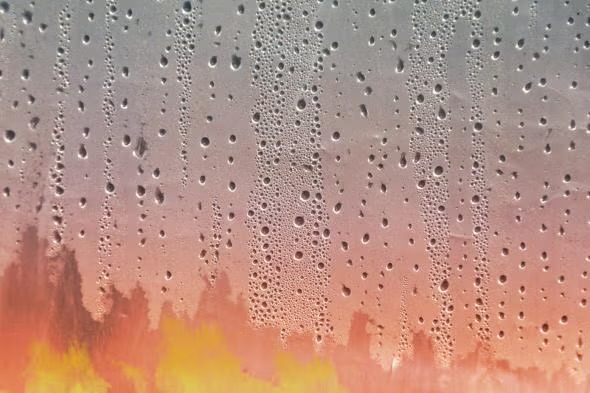
The humidity deepens, clinging to every surface. Beneath the parched topsoil, the earth still holds its quiet reserves of moisture. Each breath feels like work, the air thick and reluctant to flow into the lungs. Yet when night falls, warmth lingers... not oppressive now, but gently enveloping, a reminder that summer still holds its softer edges.
Tsuchi uruote mushi atsushi (Damp Earth, humid heat) places us firmly in the heart Greater Heat. Historically in Japan, this time was the hotest time of year. August in Japan brings average high temperatures of 87°F (30-31°C).
The humidity described by the season is actually not a direct measurement of the moisture in the air, but a relative measurement of the dew point. The dew point is the temperature that air will need to be at for relative humidity to reach 100%. Warmer air can hold more moisture than cooler air and so, a higher dew point means that the warmer air outside has less degrees to cool before it becomes fully saturated in moisture (and it will probably be holding more moisture overall). Thus the higher the dew point, the muggier it will typically feel. Dew point (and by extension, humidty) is the key driving point of weather systems. Where I live, the most significant weather events driven by the dew point are tornados. When there is warm and moist air near the ground and dry cool air above, a high dew point can trigger a thunderstorm and tornado. Thankfully, these events can be predicted and forecasted with advancing technology and meteorological education.
In Japanese mythology, Ryūjin is the dragon god of the sea. He lives in an underwater palace called Ryūgū‑jō and is said to control the tides with a magical jewel. While best known for his command over the ocean, Ryūjin is also tied to rain and storms—both vital for agriculture in Japan (Wikipedia, World History Encyclopedia).
In a season like Tsuchi uruote mushi atsushi, when the air is thick with moisture, it’s easy to imagine that humidity as Ryūjin’s breath hanging over the land. The stillness could be the pause before he decides whether to send rain or let the heat linger. High dew points, like we see this time of year, often mean the atmosphere is primed for storms, just as the myths describe Ryūjin controlling the shift from calm to turbulent weather.
This part of summer reminds us that conditions can change quickly. Heat can break into storm in a matter of minutes, just as quiet days can give way to upheaval. Staying aware and adaptable (like those who once watched the sky for signs of the dragon’s mood) can help us meet change head-on when it comes.
This summer has been a difficult one for my family and me. We’ve lost multiple loved ones and attended several unexpected funerals. Alongside that sadness, we’ve found comfort in saturating ourselves with the love of family and friends. We’re also looking ahead to brighter days and exciting travels abroad. As life continues to change and the Earth continues to spin, I hope this season of Tsuchi uruote mushi atsushi offers you a moment to reflect on both the turbulence and the changes that shape your own path.