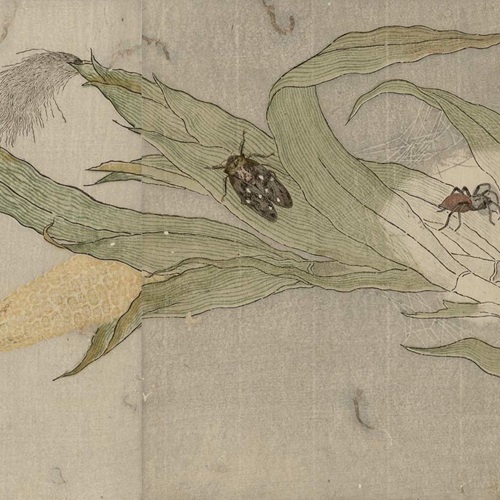
Do you hear that? I’ve been hearing it all summer: the unyielding cries of cicadas, echoing through both day and night. Their song is deeply nostalgic for me. It carries me back to late summer nights in my childhood bedroom and to long, hot days at summer camp, when the steady hum of their voices seemed to press down with the heat itself.
In Japan’s seasonal calendar, this second microseason of early autumn is called 寒蝉鳴 (Higurashi naku), “cold cicadas sing.” The name marks the moment when the insects’ calls begin to hint at the shift toward autumn, even as the air still holds summer’s heat.
Beneath that chorus lies remarkable biology. Male cicadas produce their sound using a structure known as the tymbal, a ribbed membrane in their abdomen that buckles and pops under muscle control. Their hollow body acts as a resonance chamber, amplifying each click into the familiar, resounding hum that fills summer air. Learn how cicadas make their sound.
The sound is bittersweet. Children chase the last fireflies, and on still evenings you can almost feel summer starting to recede. When school supplies appear on store shelves and the hope of cooler nights begins to whisper in your mind, those cicadas sound like an echo from childhood: familiar, fleeting, alive in memory.
Listening, it is easy to feel suspended between seasons, held for a moment in the amber of twilight before the next day’s heat arrives.